

The Banana Background
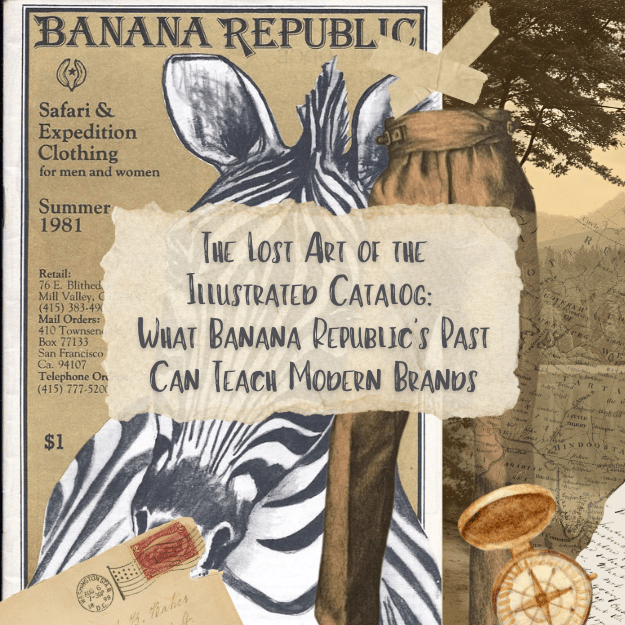
The company was founded in 1978 by husband-and-wife team Mel Ziegler and Patricia Gwilliam Ziegler in Mill Valley, California. In 1983, they sold Banana Republic to Gap, retaining creative authority but gaining the resources and reach of a major corporation.
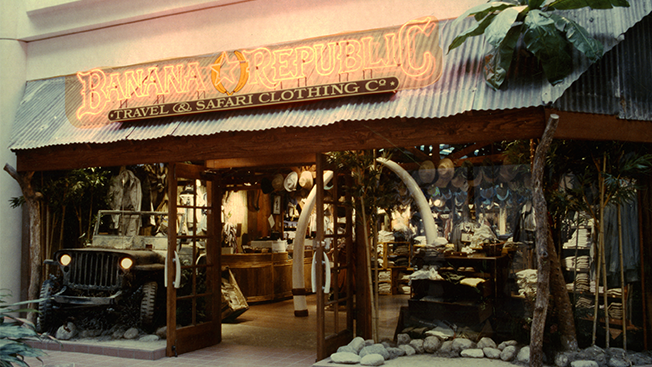
After the acquisition, safari-themed stores spread across the United States, and a dedicated design staff launched new collections supported by a richly illustrated catalog.
By 1988, though, consumer interest in the safari concept had waned and profits were slipping. The Zieglers were pushed out, the catalogs discontinued, and Banana Republic was reshaped into a polished, sophisticated brand. The company we know today is the product of decades of rebranding, far removed from its khaki-clad, hand-illustrated origins. For a deeper dive into the background, check out the Zieglers’ 2012 memoir Wild Company.

It’s About the Journey
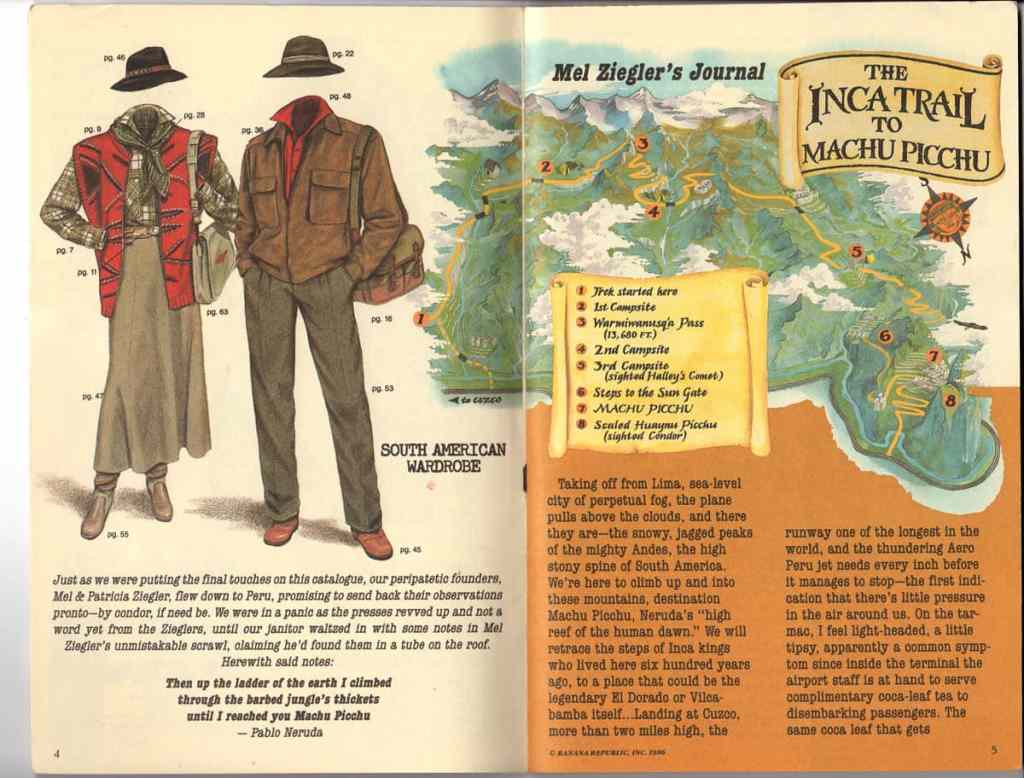
So what can these old Banana Republic catalogs teach us today? While the safari motif is no longer relevant (not to mention some poorly-aged cultural insensitivity), the illustrated catalog itself feels timeless. It wasn’t just product marketing, it was a story. Each sketch and field note let customers imagine themselves as globe-trotters, even if they never left the cul-de-sac.
The lesson? When brands frame products as part of an experience, they create emotional buy-in. The catalogs didn’t simply sell clothes; they sold the romance of adventure. And in today’s marketplace, where we’re bombarded with sales pitches, consumers don’t just want things to buy, they want a narrative that makes everyday consumption feel like part of a journey.
Trust in Tangibility
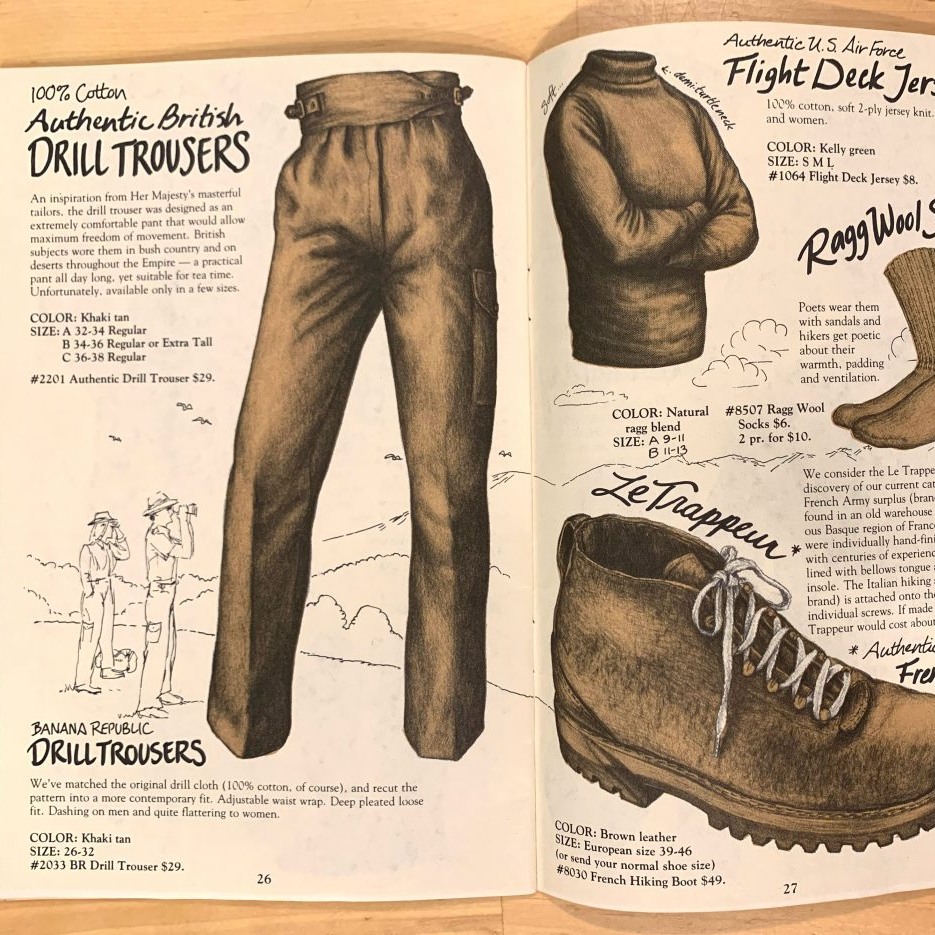
Hand-drawn artwork, maps, and field notes gave the old Banana Republic catalog a tactile, human quality that built intimacy and trust. The brand wasn’t afraid of injecting wit, humor, and just enough weird to stand out. That playfulness made it memorable in ways today’s hyper-polished brands often aren’t. While not every company can, or should, revive that exact style, the lesson is still, personality builds connection. Show your quirks and lean into your brand’s ownable insights, that’s what makes a story stick.
We Want Whimsy!
What brands can learn from the old illustrated catalogs
- Hire actual artists to create visual storytelling around the brand, maps, annotated drawings, and doodles for email campaigns, social media, in-store signage, etc.
- Inject some personality, don’t be afraid of wit, offbeat humor, and flavor instead of sticking to the same old sterile copy and design.
- Make it tangible (even when digital) infuse campaigns or strategy with personality, this stands out, especially when compared against the same old algorithmic sameness.
- Harness the power of nostalgia, use vintage inspired wording or design, even if the audience has never been there, that collective cultural nostalgia is a great tool.
- Curiosity is magnetic, Invite your audience into your world. Scavenger hunts, user-generated sketches, or behind-the-scenes Q&As make people feel like participants, not just consumers.
Authenticity is scary, it means showing the world who you are, risking rejection, and not flinching if some people don’t like it. Brands are no different. Instead of fearing that you won’t appeal to everyone, own your true identity. The right people will connect more deeply, and the ones who get it will become your most loyal advocates.
That’s what the old Banana Republic catalogs did. They paired safari shorts with old train tickets, silly doodles, and stories about far-off journeys. It wasn’t for everyone yet that’s exactly why it worked. Those catalogs didn’t read like ads; they read like magazines, or someone’s personal travel log. The products were there, but the story came first.
So maybe it’s time to bring back a little whimsy. A little more effort. A little more humanity. In a time where everything feels faster and more manufactured, the brands that slow down and tell real stories are the ones that will stand apart.
 Madeleine Twiggs
Leave a comment